
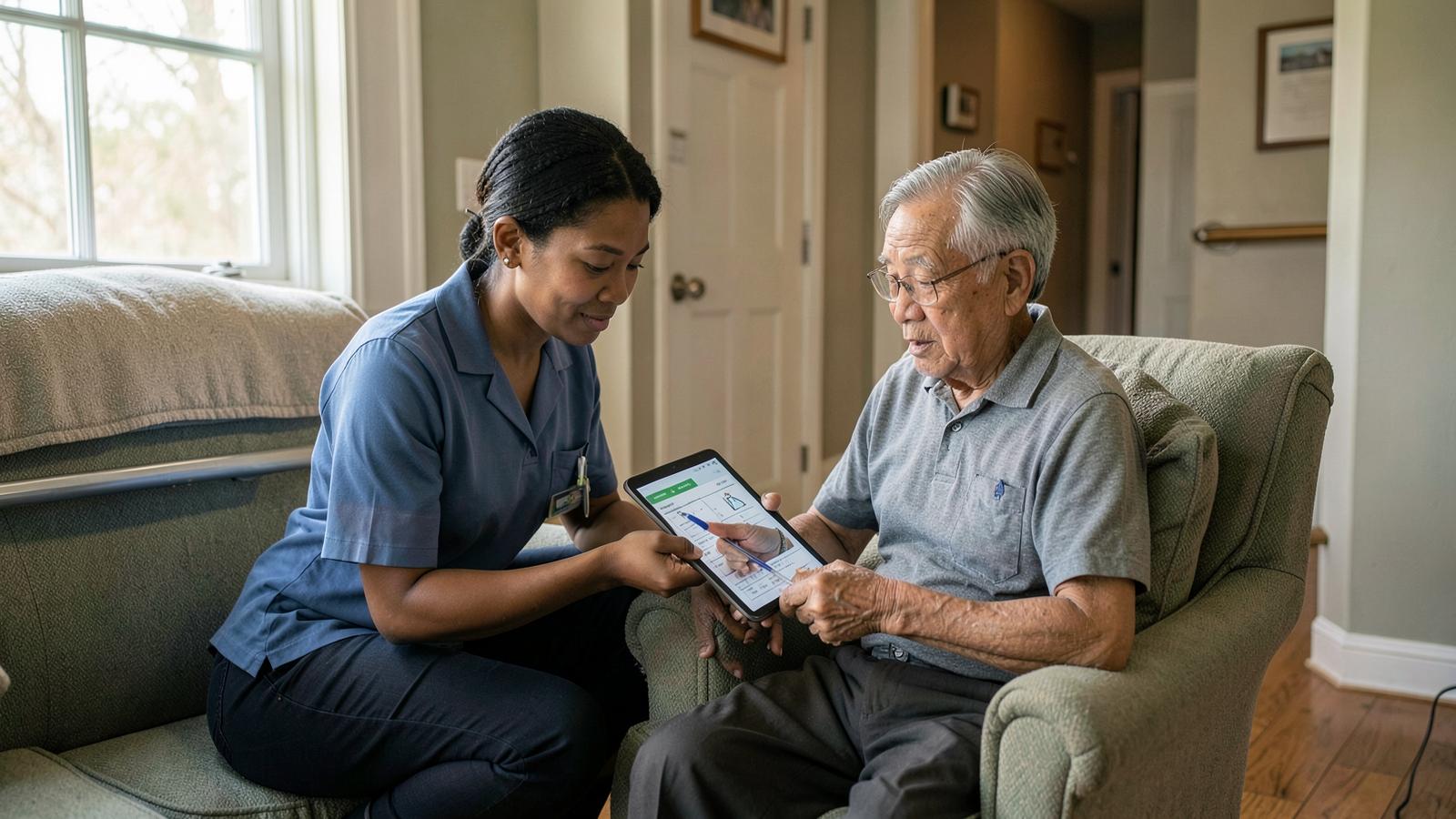
How it works
From first referral to a safer home, every step stays connected
HomeSafe follows the full aging-in-place journey: register the household, verify eligibility, assess the home, fund the right work, coordinate contractors and review the result.
The HomeSafe process
Practical steps, documented from beginning to end
Each stage creates the information the next stage needs. Assessors do not re-enter intake details, coordinators do not chase separate spreadsheets, and contractors see the approved scope without receiving confidential health information.
Photos
Document hazards and completed work with controlled access.
Measurements
Keep scope details with the job for accurate bids.
Room scores
Turn observations into clear priority bands.
Follow-up
Schedule the next check without losing history.
Six connected stages
A clear route through the program
- 1
Start with senior intake
Program staff register the household, capture contact preferences and consent, and give the client one HomeSafe ID that follows them through the program.
- 2
Verify program eligibility
Income, household composition and supporting documents are reviewed in a restricted area before funded work is approved.
- 3
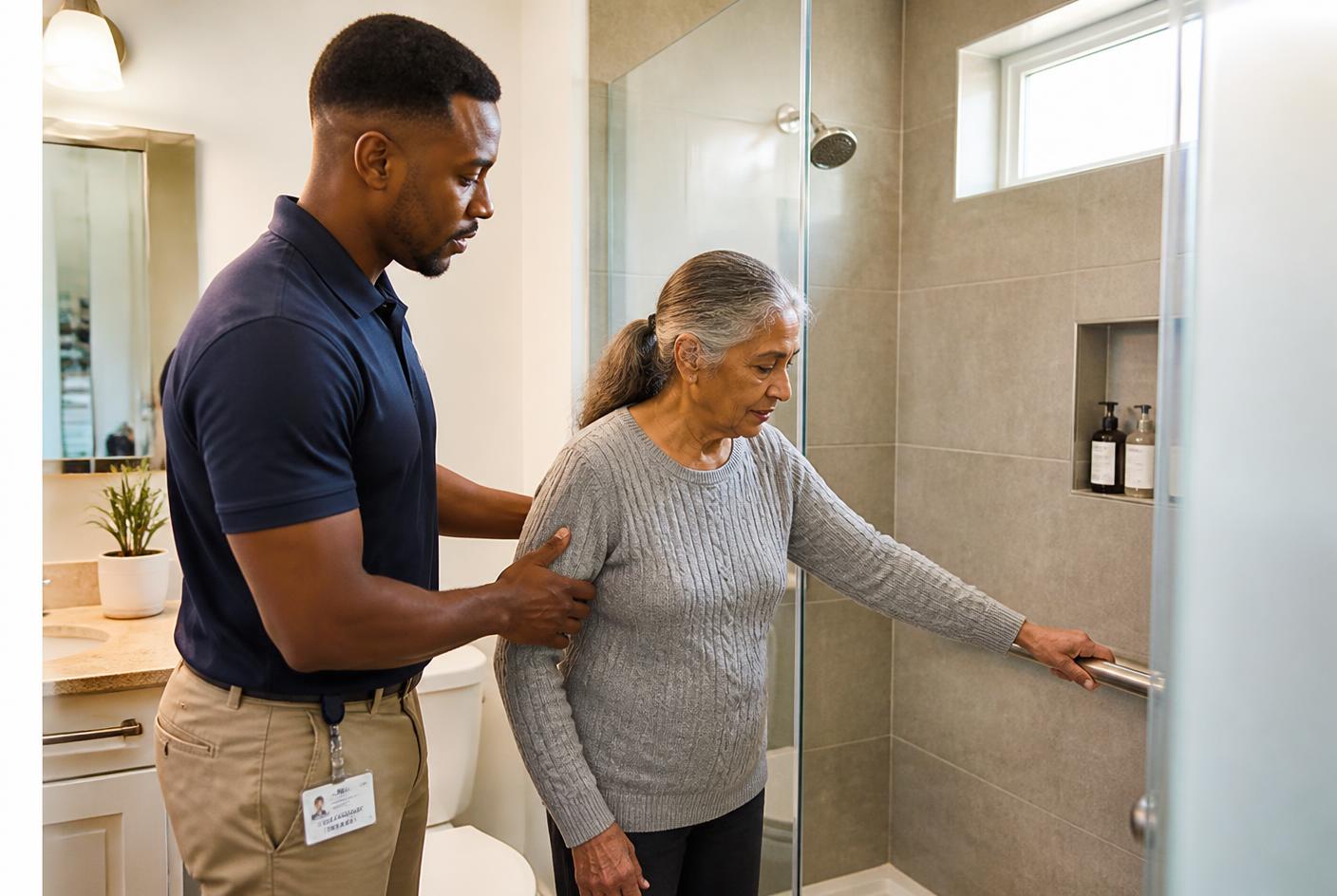
Assess the home
An assessor walks the home, records room conditions, photos, measurements, daily activities and the barriers affecting safe independence.
- 4
Approve the right plan
Scores and observations become a prioritised modification plan, with recommendations, estimated costs and a shareable de-identified report.
- 5
Coordinate the work
Approved jobs are published to qualified contractors, bids are reviewed, work orders are signed and completion evidence is collected.
- 6
Confirm the outcome
Staff review photos, checklist items, invoices and follow-up results so the household and program can see what changed.
Measured, not guessed
Scores help teams choose the work that matters first
HomeSafe converts observations into room-level scores, functional barrier themes and a practical modification list. The result is easier for a household to understand and easier for a program to approve, budget and review.
- Automatic summaries draw from the assessor's room and daily-living entries.
- Recommendations stay connected to the area where the barrier was found.
- Before and after evidence remains attached to the completed work.
Ready to see the full workflow?
We can walk through intake, assessment, bidding, work orders and reporting using the live HomeSafe portal.